
Zaanse Schans windmills and industrial history
Zaanse Schans windmills represent industrial work, including pigment, oil and timber processing, rather than a row of identical grain mills. Their different functions explain why looking inside a mill can add something quite different from a walk along the river. Choose the process you want to understand before deciding how many interiors to visit.
The Zaan region once had around 600 windmills operating at the same time. That figure describes the wider historical region, not the number standing at Zaanse Schans today. Wind power supported the processing of wood, spices, paper, oils and pigments. The mills belong to a regional industrial story, with the landscape and waterways forming the setting for that work.
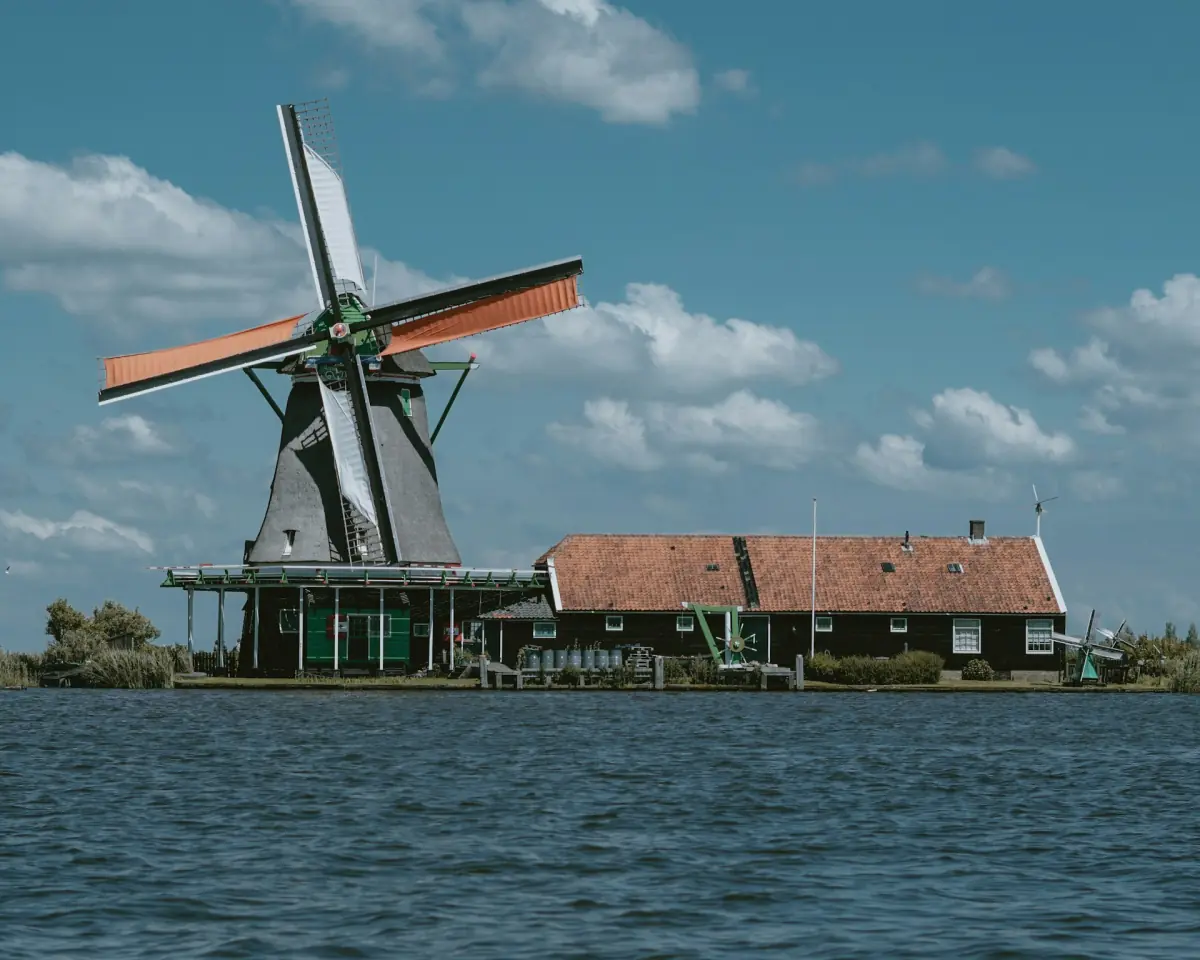
Ways to visit the windmills
The mill pass suits independent visitors and includes the windmill museum. For a guided trip, choose transport from Amsterdam or cycling with a train ticket and one mill entry.
Hand-picked tours, booked through GetYourGuide. Prices are indicative starting prices in euros (as of November 2026). Tap a tour for live availability and the current price in your currency.
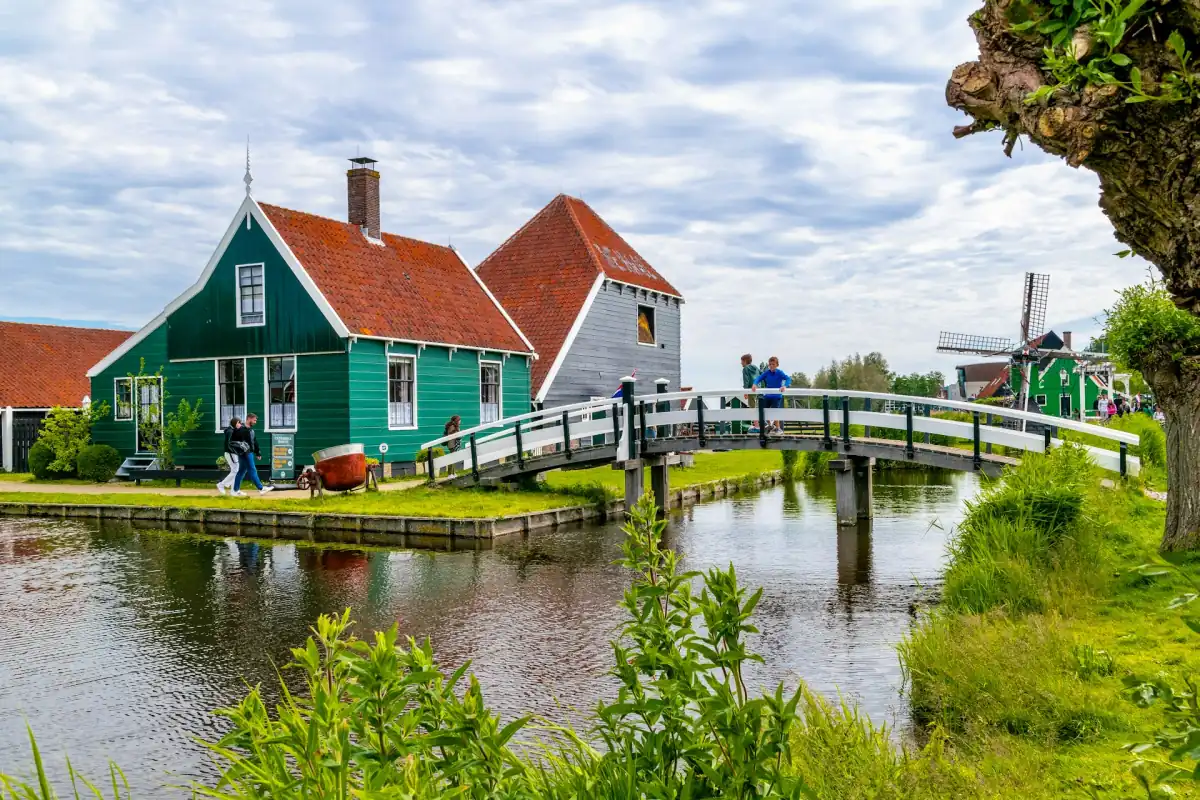
Guided cycling and windmill visit
- Return train ticket from Amsterdam Centraal to Zaandam
- Entrance to one windmill
A guide accompanies the bicycle tour after the train connection to Zaandam.
Check availability →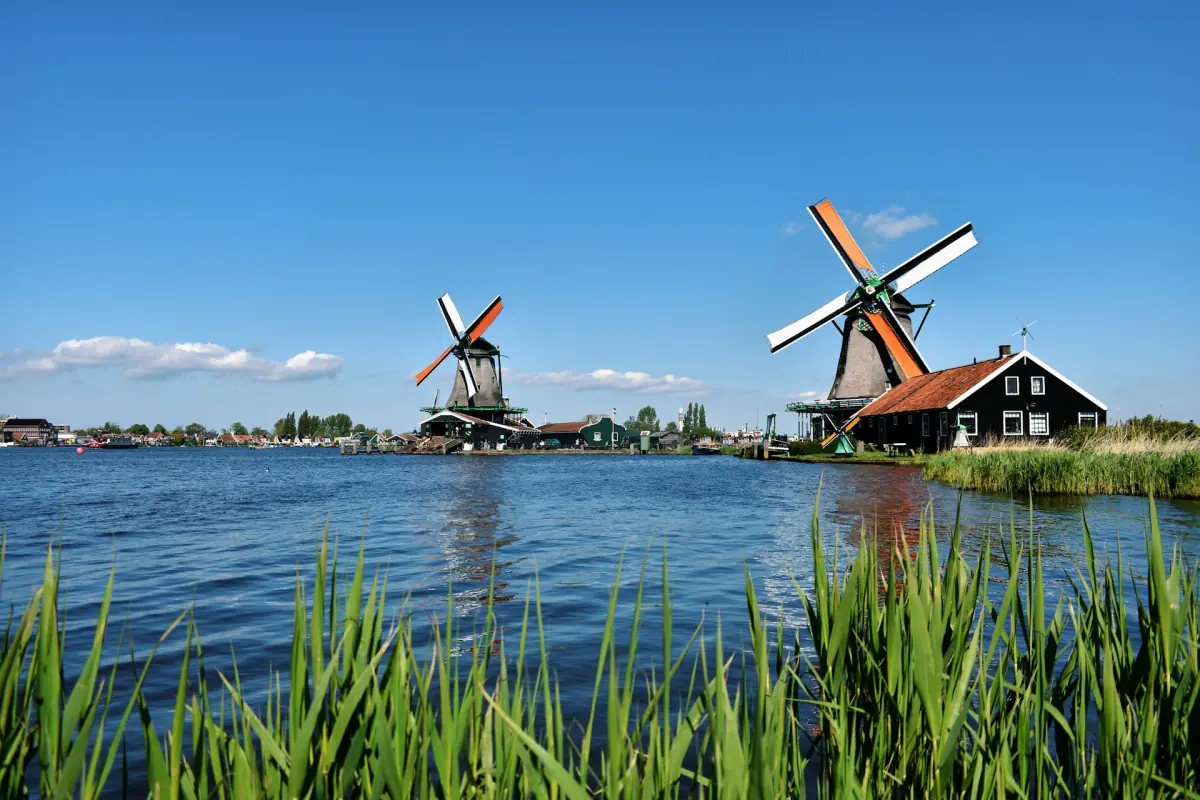
Zaanse Schans guided visit from Amsterdam
- Windmill entrance fees
- Round-trip transportation
- Demonstration of clog making
A local guide leads the visit; the listed duration is three hours.
Check availability →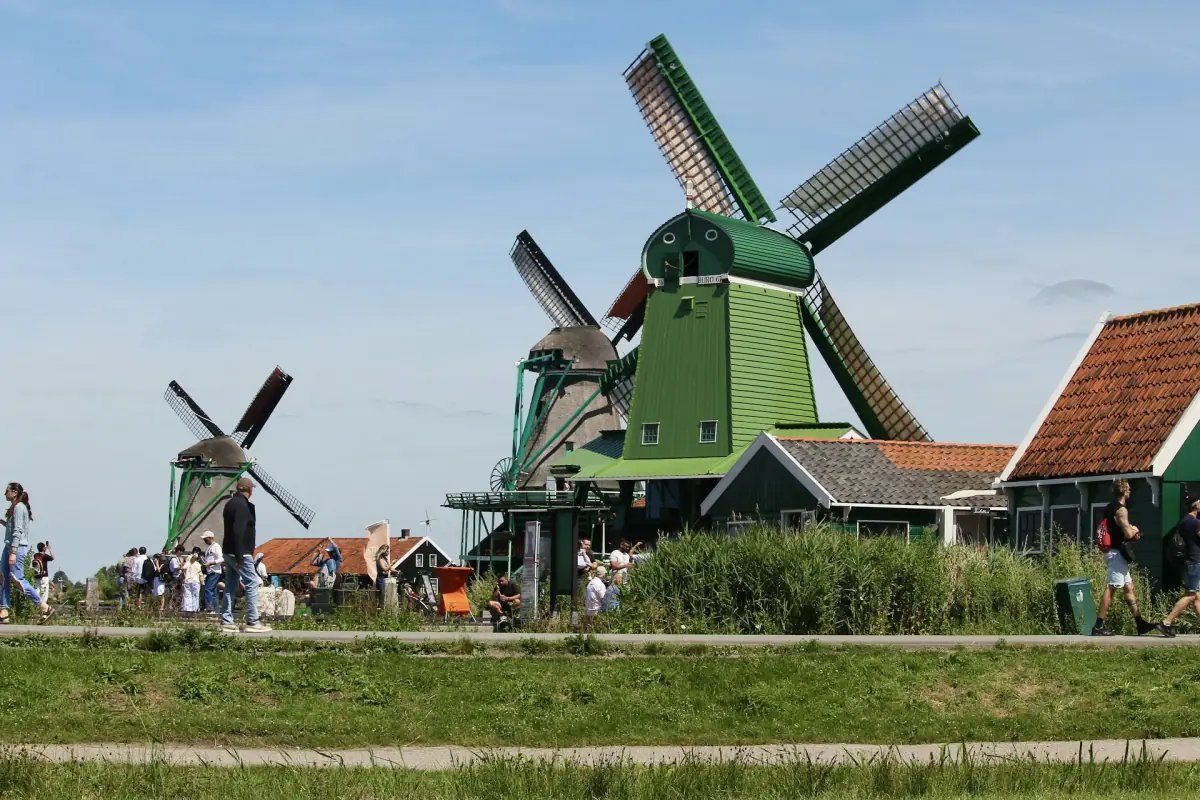
Open windmills and windmill museum ticket
- Windmills open on visit day
- World of Windmills Museum
Explore the participating open mills and the windmill museum on your selected date. The Zaans Museum is separate.
Check availability →Mill admission and guided interior visits
Choose the windmill pass for open association mills and the mill museum, or combine a mill interior with an Amsterdam excursion or guided bicycle tour.
Moved buildings and the heritage ensemble
Zaanse Schans was assembled to preserve regional buildings, following a plan developed by architect Jaap Schipper in 1946. From 1961, buildings were moved by road and water to the present location. The village therefore brings historic structures together rather than preserving every building on an unchanged original site. Its homes and workplaces evoke the Zaan region of the eighteenth and nineteenth centuries.
A Zaanse Schans walk connects domestic buildings with workshops and industrial mills. Their functions matter as much as their appearance. The village overview introduces that wider setting, while the mill interiors let you concentrate on particular materials and processes. Respect residential boundaries while moving between visitor attractions.
Paint, saw and oil mills
De Kat is the Zaanse Schans pigment mill, Het Jonge Schaap processes timber, and De Zoeker and De Bonte Hen are oil mills. These differences give an indoor visit a clear subject. De Os, a former oil mill, lost its cap and sails in 1916. A visible mill building should not by itself be treated as an available interior attraction.
De Huisman combines a spice and souvenir shop with separately arranged mill tours. Shop access and a tour of the machinery are different things. For a guided craft-centred day rather than an independent sequence of interiors, the tour comparison explains demonstrations, cycling and their admission inclusions.
A single mill, windmill pass or broader museum ticket
A single Zaanse Schans association-mill admission costs 7.50 EUR for adults and 3.75 EUR for ages 4 to 17, as recorded on 14 November 2026. The windmill pass costs 15 EUR for adults and 7.50 EUR for ages 4 to 17. It covers the open association mills and the World of Windmills Museum, also called Molenmuseum. Its selected-date validity is not the duration of a guided programme.
The broader Ticket Zaanse Schans costs 29.50 EUR for adults and 20 EUR for ages 4 to 17; ages 0 to 3 enter free. It includes two open mills of your choice, Zaans Museum with the Verkade Experience, Museum Zaanse Tijd, the mill museum and further participating heritage stops, plus a digital audio tour. This is a different product from the windmill pass offered with the mill museum.
The broader ticket allows one visit per participating location on the booked date. Exchange its electronic ticket for the printed pass at Zaans Museum, the mill museum or Museum Zaanse Tijd before using it at the attractions. Wevershuis and the cooperage were shown as closed on 14 November 2026, without a reopening date. Their inclusion in a pass description is not an assurance that they will be open.
Zaanse Schans visitors interested in one industrial process can choose a single mill; visitors concentrating on open mills and their museum can choose the windmill pass. The broader ticket suits a plan that also includes the regional museum and clockmaking heritage. Village paths remain freely accessible, so these purchases concern interiors rather than compulsory access to the village.
Opening arrangements and winter interiors
Zaanse Schans mills have individual opening arrangements, with reduced regular individual access to oil mills in winter. Build your route around the interiors open on your date, particularly for De Zoeker and De Bonte Hen. The mill museum also has seasonal arrangements. The seasonal visit guide puts those choices into the wider visit calendar.
De Kat publishes regular hours of 09:00 to 16:30, with closures on 25, 26 and 31 December and 1 January. Het Jonge Schaap publishes 09:30 to 16:30, with closures listed on 25 December and 27 April. Use these standard schedules as a starting point for choosing a visit date. Zaans Museum closes on 25 December and 1 January.
Museums, exhibitions and accessibility
Zaans Museum presents regional history and art alongside the Verkade Experience about early twentieth-century biscuit and chocolate production. It is a museum experience rather than entry to a freely accessible working factory. Museum Zaanse Tijd introduces regional clockmaking. The World of Windmills Museum provides a museum counterpart to the industrial buildings along the river.
Het Jonge Schaap is described as an accessible mill, while De Bonte Hen offers accessible ground-floor access. Those statements describe different levels of access. De Kat has steep stairs and unheated rooms. Historic village bridges and paths are not uniformly wheelchair accessible; match the intended interiors and route to your needs. Zaans Museum has lifts and an accessible toilet, although some large or high wheelchair seats may not fit its lift.
Organised Zaanse Schans visits offer another way to include an interior: the guided Amsterdam excursion includes windmill entrance fees, and the five-hour train-and-bike experience includes admission to one mill. They are guided activities with transport elements, not additional versions of the same admission pass. Compare their starts on the Amsterdam departure page and the tour overview.
Windmill admission questions
How much does one mill cost?
7.50 EUR for adults and 3.75 EUR for ages 4 to 17 are the individual association-mill prices recorded on 14 November 2026. Choose a mill that is open on your date. If several open mills and the mill museum are your focus, compare the separate windmill pass before buying individual admissions.
Does the windmill pass include Zaans Museum?
No, the Zaanse Schans windmill pass covers open association mills and the World of Windmills Museum. Zaans Museum belongs to the broader Ticket Zaanse Schans, which also includes two open mills of your choice. Compare the actual attraction list rather than treating these differently scoped passes as interchangeable museum tickets.
Can I visit every mill throughout winter?
No, Zaanse Schans mills have individual schedules and oil-mill access is reduced in winter. Choose from the interiors open on your visit date rather than planning around every visible mill. The pass provides admission to its participating open attractions; its validity does not require a closed building to open.